





Green Raksha Vermicompost bed 350 GSM – HDPE Vermicompost Bed
Couldn't load pickup availability
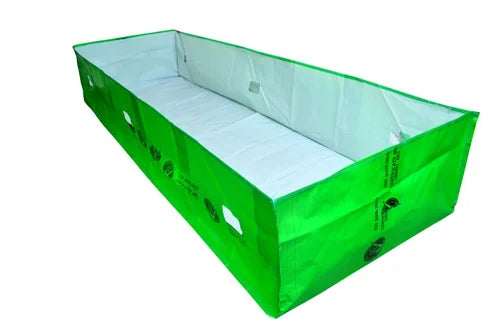
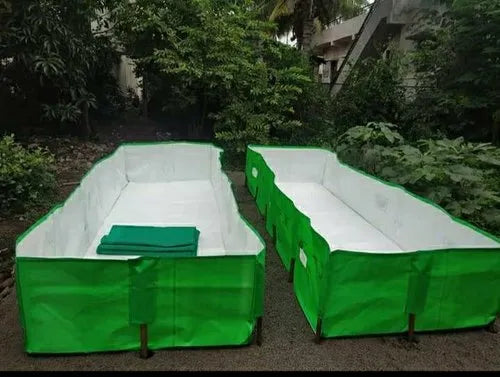
Produce vermicompost conveniently on the farm with the Green Raksha 350 GSM Vermibed, a portable vermicomposting bed made from multi-layer virgin HDPE fabric for agricultural and organic-waste composting applications. The bed is UV stabilized for extended outdoor use and is designed with 6 aeration windows to support airflow through the composting material. Fourteen side-support pockets allow bamboo, poles or other suitable supports to be positioned around the bed to help maintain its rectangular shape during use.
Product Specifications
- Product Type: HDPE Vermicompost Bed / Vermibed
- Brand: Green Raksha Vermibed
- Material: Multi-Layer Virgin HDPE Fabric
- Fabric Thickness: 350 GSM
- UV Stabilized: Yes
- Aeration Windows: 6
- Side Support Pockets: 14
- Shape: Rectangular
- Installation: Supported using bamboo/poles or suitable structural supports
Key Features
- 350 GSM HDPE Fabric: Manufactured from multi-layer virgin HDPE material designed for agricultural vermicomposting use.
- UV-Stabilized Construction: Provides improved resistance to prolonged outdoor sunlight exposure compared with untreated fabric.
- 6 Aeration Windows: Side ventilation helps maintain airflow within the vermicomposting bed.
- 14 Support Pockets: Integrated side pockets allow bamboo or suitable supporting poles to be positioned around the bed.
- Portable & Relocatable: Flexible construction allows the bed to be dismantled, moved and installed at another suitable location.
- No Permanent Construction Required: Avoids the need to build a fixed concrete or masonry composting bed.
- Multiple Size Options: Available in 12 × 4 × 2 ft, 10 × 4 × 2 ft and 8 × 4 × 2 ft sizes.
- Suitable for Vermicompost Production: Designed for processing suitable organic material with earthworms into vermicompost.
- Easy Storage: Can be folded when empty for easier transportation and off-season storage.
Suitable Applications
- Vermicompost production
- Organic farming
- Farm-waste composting
- Crop-residue composting
- Nurseries and horticulture units
- Farmer Producer Organisations
- Self-help groups
- Organic manure production units
- Farm-level waste management
How a Vermibed Works
Suitable biodegradable organic material is placed inside the prepared vermibed and managed under appropriate moisture, temperature and aeration conditions. Suitable composting earthworms are then introduced according to the vermicomposting method being followed.
As the organic material is processed, it gradually develops into vermicompost that can be harvested and used as an organic soil amendment. The side ventilation windows help air move through the composting environment while the support pockets help maintain the shape of the bed.
Basic Installation
- Select a level, well-drained location with suitable protection from extreme weather.
- Unfold the vermibed completely.
- Insert suitable bamboo or support poles into the side pockets.
- Make sure the bed is properly supported and maintains its intended shape.
- Prepare the bedding and organic material according to the vermicomposting method being followed.
- Maintain suitable moisture and aeration throughout the composting cycle.
Care & Maintenance
- Avoid dragging a filled vermibed over rough or sharp surfaces.
- Keep sharp tools away from the HDPE fabric.
- Do not allow unnecessary waterlogging inside the bed.
- Inspect ventilation windows and support pockets periodically.
- Clean and dry the empty bed before long-term storage.
- Fold and store in a protected location when not in use.
Expected Service Life
The product is stated to have an expected service life of approximately 7–8 years. Actual service life can vary according to sunlight exposure, installation, handling, loading, climate and maintenance conditions.
 English
 हिन्दी
 मराठी
मराठी